

Utah Gives up its Dinosaur Treasures

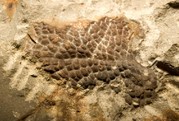
A recent dig led by palaeontologists from the Burpee Museum of Natural History, in Rockford, Illinois, has revealed plenty of dinosaur remains along with other fossils such as petrified trees. They come from the Morrison Formation, renowned for its wealth of dinosaur finds. Continue Reading…

New Sauropod Dinosaur in New Zealand

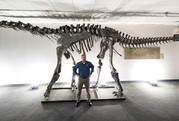
A dinosaur vertebra that was discovered in 1999 in Hawke’s Bay, New Zealand, has only just been scientifically identified. The results that have been published describe the dinosaur as one the largest type of sauropod – a titanosaurid. Continue Reading…

Quetzalcoatlus Fed off Baby Dinosaurs

With a wing-span of up to 12 metres Quetzalcoatlus was the largest flying animal ever and an azhdarchid pterosaur. Despite Quetzalcoatlus’ large size it was fairly light at about 130kg, owing to its hollow bones and small body. Continue Reading…

Bone-bed Find In The Badlands Of Utah

Excavators from the Burpee Museum of Natural History have discovered over 100 fossilised bones recently in south-eastern Utah. The bones belong to 150 million year old dinosaurs from the Jurassic period whose remains were washed own and trapped in a sandbar measuring over 70 metres long and 35 metres wide. Continue Reading…

Where There’s Muck There’s Brass!

In this case the muck is 140 million years old and belongs to a dinosaur from the Jurassic period. At a recent auction held by Bonhams the auctioneers, in New York, a coprolite was sold for almost £500 – twice the expected amount. A coprolite is dinosaur dung that has been fossilised into what is a hard rocky substance. Continue Reading…

Modern Birds Evolved From T Rex

New research published in the journal Science shows more clearly than ever the evolutionary link between birds and Tyrannosaurus rex. Bone structure and feather-like remains of dinosaurs have previously given strong indications of a link with modern birds. Now it would seem the two groups have been linked on a molecular level. Continue Reading…

New date for Dinosaur Extinction

Owing to refinements in the argon-argon dating method for fossils and rocks it is now possible to be more precise about the exact date of the dinosaur mass extinction. Scientists from the University of California, Berkeley, have been able to lessen the margin of error and bring this technique more in to line with other dating techniques. Continue Reading…

Britain Was The Real Jurassic Park

A new study by scientists at the University of Portsmouth has shown how Britain stood at the crossroads for dinosaur migration and linked the landmasses of North America and Eurasia before they finally split apart. Continue Reading…

The Rare Triceratops Skeleton Auctioned At Christies for 592,250 Euros

The rare skeleton of the dinosaur Triceratops was sold today at Christies in Paris for 592,250 Euros to a private US collector.

The Dinosaur Museum in Dorchester made a desperate attempt to bring the dinosaur to the UK but was unable to raise sufficient funds. Continue Reading…

Feathers from Age of Dinosaurs in Amber

100 million year old amber discovered in France near the fossilised teeth of various dinosaurs has been found to contain seven feathers. The feathers either belong to a dinosaur or a very early bird. The teeth are from Troodontid and Dromaeosaurid types of dinosaur. Both of these were highly intelligent two-legged dinosaurs and are believed to have had feathers. Continue Reading…